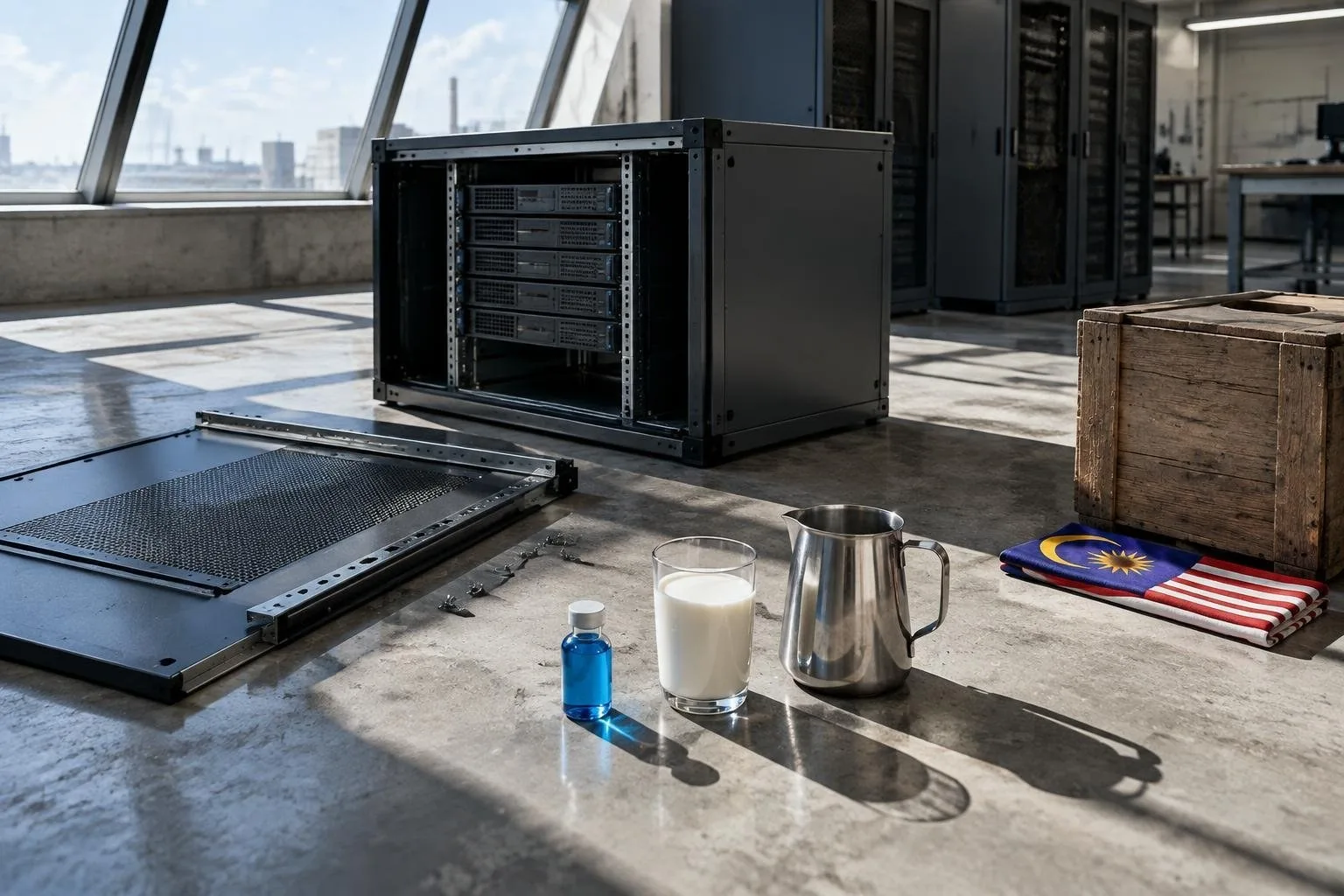
Across three distinct sectors, capital is flowing toward the twin forces of artificial intelligence and protein. Alphabet announced a $15 billion commitment to build new data facilities in Malaysia, pharmaceutical giants are locking up billions to protect herds, and U.S. shoppers are swapping ordinary dairy for high-protein alternatives. Together these moves illustrate how investors are positioning themselves for a future where data crunching power and protein supply are both critical constraints.
Alphabet’s $15 billion Malaysian data-center push
The tech giant revealed a $15 billion spend on Malaysian data-center infrastructure, a clear signal that the AI compute shortage is far from resolved. Though the announcement landed just after the U.S. midterm elections, the planning horizon for such projects spans years, evidenced by Alphabet’s earlier $2 billion 2024 stake in the country and a $9.5 billion U.S. data-center build-out in 2022. The timing underscores that political shifts, whether Democratic or Republican, have not deterred the company from expanding its global footprint.
Globally, the data-center market is accelerating as cloud providers race to meet surging model-training workloads. Microsoft opened its largest Indian facility earlier this year, and analysts project a 13.37% compound annual growth rate for India’s data-center capacity through 2035. Alphabet’s Malaysian venture fits this broader pattern: firms are diversifying locations to reduce latency, hedge against supply-chain bottlenecks, and tap cheaper energy sources. Some executives even flirt with the idea of orbital data centres, highlighting how pressing the AI demand has become.
Livestock health attracts record-level capital as protein demand climbs
Rising global protein consumption—fueled by population growth, weight-loss medications, and a renewed focus on meat—has sparked a wave of investment in animal-health technologies. In the past year, Merck purchased poultry-tech firm Targan and is expanding a Kansas animal-health plant by $895 million. Elanco added Dutch dairy-cow specialist AHV International, while Zoetis spent $160 million on Neogen’s animal-genomics division. These deals illustrate a sector determined to keep herds healthier, boost yields, and safeguard the food supply.
Beyond traditional vaccines, the industry is embracing automation, rapid-spray vaccination platforms, and life-cycle monitoring sensors that flag disease before it spreads. Venture capital has poured a record $470 million into global livestock-management startups this year, with $88 million earmarked for pure animal-health innovations. Although profit margins on livestock drugs are thinner than those on pet medicines—because treatments must be safe for both animals and humans—the steady, compounding demand for protein makes the space attractive for long-term investors.
U.S. dairy shoppers gravitate toward high-protein options
Recent market data shows American consumers are increasingly favoring protein-rich dairy products while trimming spending on lower-margin cheese categories. Greek yogurt volumes are up 15% year-to-date, Icelandic yogurt is up 25%, and cottage-cheese sales have risen 12%. Enhanced-protein milks have climbed 10% this year, and flavored whole-milk sales jumped 16% in August versus the prior year. The shift reflects a consumer mindset that values protein content, convenience, and perceived health benefits amid persistent inflation.
For dairy producers, the trend opens new revenue streams but also requires adjustments in processing and packaging. Brands that can deliver consistent protein levels and price points are likely to capture a larger share of the “staple-still-premium” segment. The overall message is clear: as households tighten budgets, they are willing to allocate more of their spending to products that promise functional nutrition, reinforcing the broader narrative of protein-driven investment across food-system sectors.