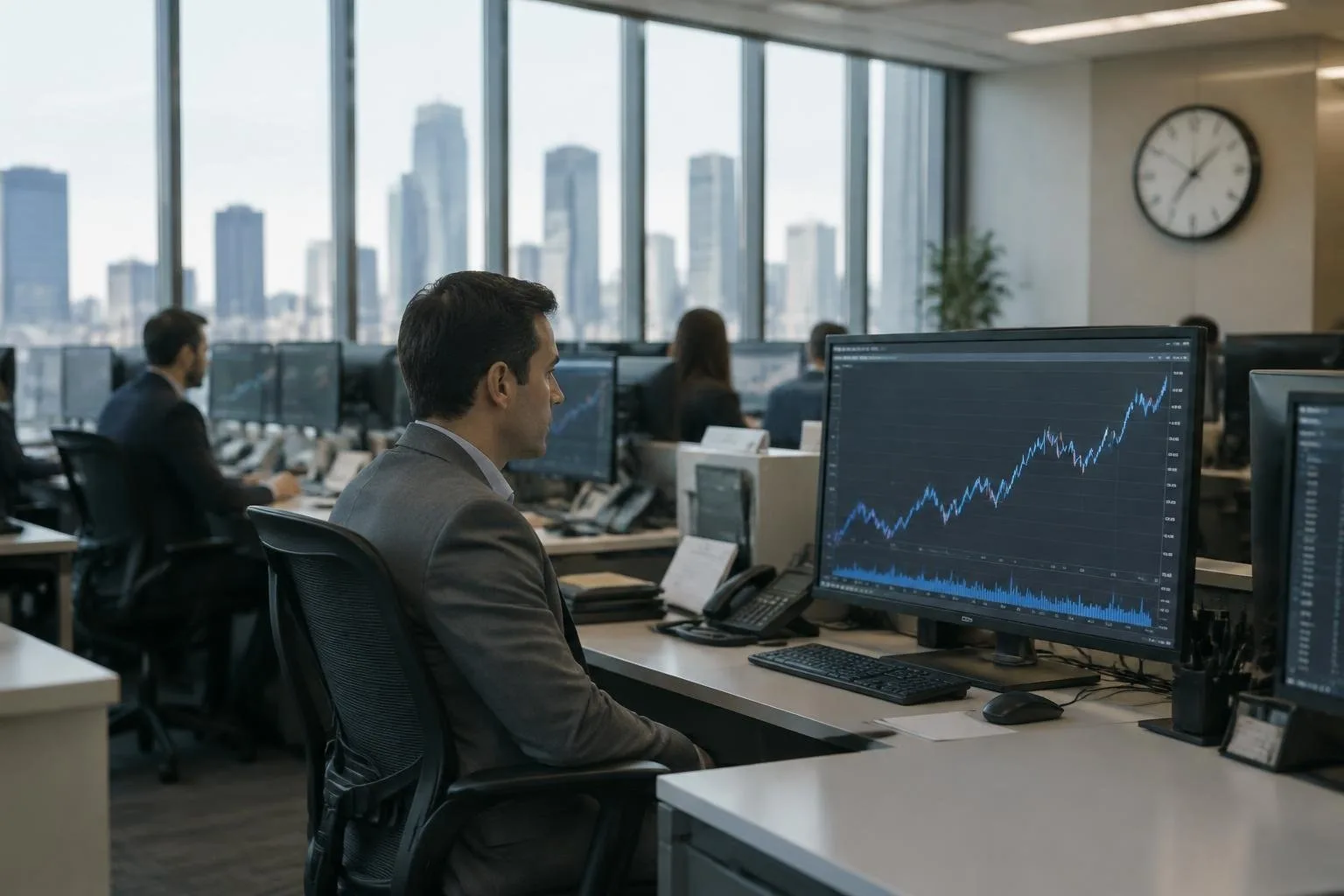
The U.S. equity market opened on a positive note on Wednesday, with investors reacting to a surprisingly strong performance from SpaceX. The rocket-builder’s quarterly numbers rekindled enthusiasm for the broader artificial intelligence trade, setting the stage for a busy earnings week that includes Tesla and Meta. As the day unfolded, the major indices nudged higher, confirming that the market is still sensitive to any fresh catalyst that can offset lingering concerns over inflation, interest-rate policy, and the recent volatility in AI-related shares.
Market snapshot
By early afternoon, the Dow Jones Industrial Average was up roughly 0.2%, while the S&P 500 added 0.5% to its tally. The technology-heavy Nasdaq Composite posted the strongest gain of the three, climbing about 1.1% and posting a level of 52,653.15, up 157 points from the previous close. These modest moves contrasted with Monday’s mixed finish and reflected a broad-based rally driven mainly by the tech sector, which reclaimed ground after a brief pullback earlier in the week.
SpaceX fuels tech rally
SpaceX shares erupted as much as 10% after the company released its first profit as a public entity, driven largely by a surge in AI compute services and cloud-based offerings. The earnings release highlighted a rapid expansion of the firm’s data-center business, which now rivals traditional cloud providers in terms of processing power. In tandem with the financial beat, CEO Elon Musk announced that SpaceX and Tesla have each formed special committees to explore a potential merger, a hint that could reshape two of the most influential technology conglomerates in the world.
Earnings landscape and AI stocks
Investors turned their focus next to the upcoming reports from Tesla and Meta scheduled to be released after the market close. Both companies are expected to provide a clearer picture of consumer-tech demand as the AI boom matures. Meanwhile, streaming giant Netflix saw its stock dip 4% after issuing a fourth-quarter revenue outlook of $13.44 billion—slightly below the consensus of $13.51 billion—and trimming its 2026 ad-revenue guidance to $2.7 billion. The downgrade sparked worries that the platform’s growth trajectory may be flattening despite recent price hikes.
On the chip side, Nvidia rallied more than 1.5% and AMD jumped 2%, both buoyed by the perceived upside from SpaceX’s AI compute expansion. Super Micro Computer a specialist in AI-focused servers, announced better-than-expected summer revenue forecasts, sending its shares up 12% and reinforcing confidence that demand for data-center capacity remains resilient. The broader AI portfolio, however, stayed uneven; some firms such as CoreWeave continued to swing sharply amid concerns over the cost of financing large-scale GPU deployments.
Broader market dynamics
Across the wider market, Berkshire Hathaway recorded its first record-high close since Warren Buffett announced his impending retirement, with Class B shares edging above the May 2025 peak. The conglomerate has enjoyed a 10-day winning streak, largely as investors rotated out of the more speculative AI names. Treasury yields offered additional support, with the 10-year note slipping to 5.09% from 5.12%, easing borrowing costs for both corporations and consumers. oil prices remained relatively steady, with Brent crude hovering near $108 a barrel and WTI around $97, limiting the inflationary pressure that has lingered since the early-year surge.
Finally, the AI sector could see another landmark event this week as Anthropic prepares to file its S-1 registration statement, potentially launching the largest initial public offering in the industry’s history. The filing would mark a crucial test of investor appetite for AI-driven businesses after a period of heightened scrutiny over capital-intensive development models. As the earnings season progresses, the market’s direction will likely hinge on whether these high-growth companies can deliver sustainable profits while navigating macroeconomic headwinds.