
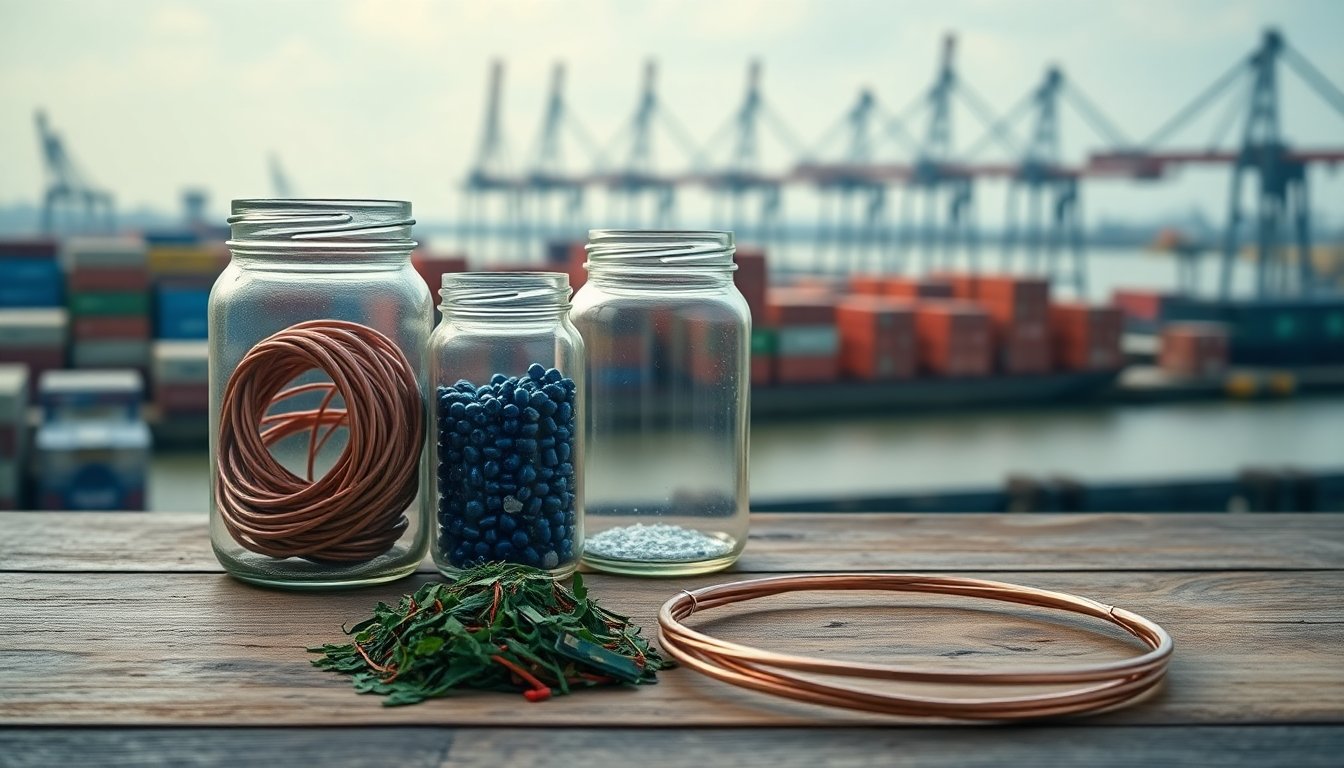
The global push to electrify transport and decarbonize power systems has placed critical minerals such as lithium, cobalt, nickel and copper at the center of strategic planning. Governments and industry are investing heavily to secure mine-to-refinery capacity, but an often-overlooked reality is that much of this same material is already circulating in products that reach end of life. Turning those flows into feedstock requires coordinated action across collection, processing and standards—an approach commonly described as a circular mineral economy. This piece outlines why recycling matters, the obstacles slowing the transition and practical levers that can be pulled to close the loop.
The problems are not solely technical; they are systemic. A handful of countries dominate refining and extraction capacity, creating concentration risks that ripple through manufacturing, energy and defense sectors. At the same time, mining new deposits faces long lead times, rising capital costs and environmental constraints that limit rapid scale-up. By contrast, recycling offers concentrated, processed material, often with lower energy and water footprints. Yet secondary streams trade at a persistent recycled discount, and procurement habits favor primary suppliers. Addressing these market frictions and improving traceability would make recycling a stronger complement to mining rather than a marginal afterthought.
Why recycling reduces supply fragility
When strategic minerals are kept within domestic or regional value chains, the economic and geopolitical vulnerabilities tied to import dependence fall. Recycling makes sense because it taps material already embedded in batteries, electronics and industrial scrap—items that contain high concentrations of useful metals compared with low-grade ore. The recovery process recovers substantial shares of valuable elements and can often be sited closer to manufacturing hubs. Beyond raw supply, recycling also reduces reliance on long and concentrated refining networks, creating a more distributed and resilient fabric for critical inputs. In short, recycling is not just an environmental choice but a practical supply-security measure.
Concentration and mining limits
Global statistics show that a few producers account for the majority of refining capacity and mined output for many key elements. This concentration invites policy actions such as export controls and quotas that can quickly disrupt flows. Meanwhile, new mining projects face capital intensity and permitting hurdles that make them slow and expensive to scale, especially outside incumbent producing countries. These realities create a gap between projected demand for electrification and practical supply growth. Recycling removes some of those constraints by offering shorter lead times for material recovery and by lowering the dependency on remote extraction sites.
The environmental and economic benefits of secondary supply
Lifecycle assessments consistently demonstrate big gains from recycling. Recovering metals from spent batteries and electronics dramatically reduces greenhouse gas emissions, energy use and water consumption compared with producing the same materials from virgin ore. These gains are not theoretical: modern recycling flows can achieve high recovery percentages for lithium, nickel and cobalt, and the emissions intensity can fall by orders of magnitude when green electricity is used. These environmental wins are mirrored by economic advantages, since processing concentrated secondary feedstock often costs less than the full chain of mining, hauling and smelting low-grade ores.
How to build a functioning circular mineral system
Practical progress requires action on several fronts at once: investment in collection networks, scaling modern recycling plants, standards for material quality and traceability, and demand-side policies that favor recovered content. Regulatory tools such as recycled content mandates, public procurement rules and product passports give market signals that can erode the recycled discount and improve price parity with primary materials. Strategic pairing of recyclers and downstream manufacturers within regional industrial ecosystems—so that recovered lithium carbonate or precursor chemicals feed nearby cathode or battery plants—closes transport and market gaps that presently weaken domestic loops.
Policy and industrial levers
Governments can accelerate adoption by underwriting infrastructure and aligning incentives. Examples include funding for collection schemes, trade finance for domestic processing, and procurement preferences for recycled content in clean-energy projects. Private sector actors should invest in technology partnerships to enhance recovery yields and reduce processing costs. Equally important is developing robust digital traceability systems that certify origins and composition of recovered material. These actions reduce uncertainty for buyers and help integrate secondary materials into mainstream supply chains.
In the end, treating end-of-life batteries and electronic scrap as strategic resources rather than waste changes the calculus. The materials to support a low-carbon transition are circulating today; capturing them requires policy clarity, investment in processing capacity and market reforms to value recovered content appropriately. Nations and companies that build efficient circular mineral systems will improve environmental outcomes, reduce import dependence and create competitive manufacturing advantages. The path to mineral autonomy begins with recognizing that our discarded products are a resource—not merely trash.


